![]() |
Topology: n. 1. the study of the properties of geo- metrical configurations unaltered when subjected to one-to-one transformation continuous in both directions.
Ronald Freiwald, Ph.D., professor of mathematics, specializes in topology and set theory. He explains topology thusly:
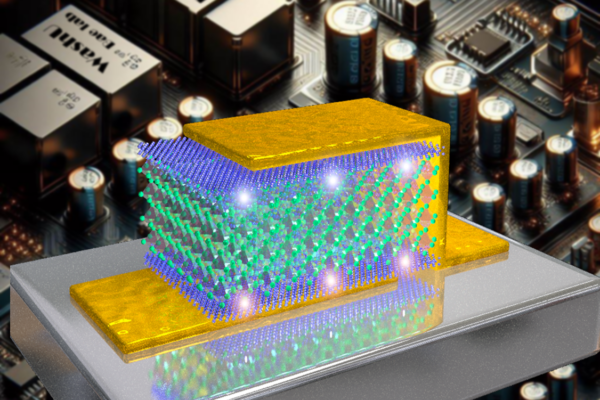
"Take a washer, or donut," he said. "The fact that it has a hole in the middle is a property that you never lose when a homeomorphism [the one-to-one transformation] is applied. The hole stays despite the other changes. Topology is one of five or six basic branches of mathematics. Of course, it gets more abstract and goes off in different directions from this simple description."
The non-mathematician might think that Freiwald himself is a bit of a study in topology. A faculty member for 30 years, Freiwald remains much the same stalwart scholar and teacher that he was in 1970 freshly arrived from the University of Rochester, where he got his Ph.D. Yet over his three decades at Washington University, Freiwald has been transformed many times --and no doubt constantly pulled in at least two directions.
![]() |
Freiwald has been a researcher and a pillar of the mathematics department in Arts & Sciences who teaches some of the most challenging and innovative courses offered to undergraduates. He's been very active advising mathematics students and molding the departmental curriculum. Three times he's been awarded the Arts & Sciences Faculty Teaching Award from the Council of Students of Arts & Sciences, and in 1997 Missouri Gov. Mel Carnahan presented him with the Governor's Award for Excellence in Teaching. In 1992, he received a Distinguished Faculty Award from the University's Alumni Board of Governors at Founders Day ceremonies.
"Summer School was a fun job because it was like running a mini-university on your own," he said.
"After five years, I knew someone in almost every academic department. I felt I had a much stronger integration into the campus and certainly a much stronger network of people. For 10 years, I've drawn on them for many different things.
"And from the beginning," he added, "I learned that I like running things where I can get my hands dirty."
Today, Freiwald's hands are still smudged, if you will, plunged into much of the topsoil of the mathematics department. He currently serves as chair of the department's undergraduate committee, which plans and implements the entire undergraduate mathematics program. He also serves on a number of boards and committees and is freshman adviser, a position he's held almost continually since 1991 and many other times previously.
"I do an awful lot of stuff that is behind the scenes," he explained, from course listing to teaching assistants' assignments and student advising. For instance, Freiwald has put a lot of time into making the department's undergraduate Web page more informative and user-friendly. He thinks it is one of the factors contributing to the rising number of mathematics majors at the University over the past few years, now numbering about 100.
"We have more declared mathematics majors than we've had in the last 10 years, and that's gratifying to all of us in the department," Freiwald said in his Cupples I office, surrounded by an array of feline images ranging from house cats to lions.
Shortly after his stint as Summer School director, Freiwald made another key contribution to his University --and department --when he designed "Calculus II With Computing," which, in the fall of 1992, became the first calculus course here allied with a computer laboratory.
"The course has become very popular and fills up every fall," Freiwald said. "I really enjoy teaching it because students who take it like the subject matter and are good at it."
Freiwald has taught that class or traditional calculus nearly every fall in recent years and Topology 417-418 roughly every other year. He describes the latter as a "gateway" course for serious mathematics students.
"It's a basic tool for all sorts of advanced mathematics, and it draws our best undergraduate majors, as well as occasional students from other departments," he said.
Thirty years of mathematics education provides Freiwald with a keen perspective on students and education trends. Calculators with graphing capabilities are getting powerful enough now to be considered hand-held computers, and their use is very common in calculus classes.
"Many mathematicians see the graphing calculator as a mixed blessing, but I think that if the technology is used creatively by the instructor, and neither the instructor nor students abuse it, the calculator can be a tremendous learning tool," he said. "It can produce visualizations and highly accurate approximations to solutions that would have been far too tedious to do in the old days, by hand. Sometimes I tell students to think of calculus as an additional tool for turning such approximations into exact answers."
Likewise, Freiwald sees little difference in the caliber of topflight mathematics majors in 2000 compared with those of 1970. But he notes one of the biggest changes in college mathematics today is that more students have taken calculus or pre-calculus in high school and more need the course as a requirement, compared to 30 years ago when calculus rarely was taught in high school.
"Back then, calculus was required for hard science and math majors, but now pre-meds take it, and all architecture, business and economics majors as well," he said. "So we find people in class who never would have been there in the past."
Freiwald has a vast appreciation of other disciplines and topics. An avid reader, he consumes everything from science fiction to theology, history and many fields in between. Freiwald is single and lives in the city with two cats, Boris and Natasha, a brother-and-sister duo of whom he's very fond. He does lots of volunteer work through his church and for Food Outreach, a group that provides meals for people living with HIV/AIDS. He's a connoisseur of fine foods and an accomplished cook.
"I really enjoy having a group of people get together once in a while and serving a several-course meal during the evening," Freiwald said.
Growing up in Elizabeth, Pa., near Pittsburgh, Freiwald is the only child of the late Charles Freiwald and Mildred Freiwald. His father worked in a steel mill and his mother worked in the home. At 90, Mildred Freiwald lives on her own in the same house where Freiwald grew up.
At Washington and Jefferson College in Washington, Pa., Freiwald seriously considered German or philosophy as his major, but stuck with mathematics when he began to think of becoming a college professor. At the University of Rochester, he was supported throughout his graduate program by a Danforth Foundation fellowship and thoroughly enjoyed the annual conference of fellows from around the country that brought together "a wonderful cross-fertilization of people doing things remote from what I was doing," he said.
For three summers in graduate school, Freiwald taught high school students with college potential at the College of the Virgin Islands through a popular federal program called Project Upward Bound. In the summer of 1969, he was head of the Mathematics Program.
"Project Upward Bound was my first exposure to teaching, and it was an affirmation that I could be an effective teacher because I enjoyed what I did so much," he said. "The experience and the locale were wonderful --I loved being by the ocean."
The lack of an ocean in eastern Missouri is about all that Freiwald can find fault with here at the University, where he begins his 31st academic year this fall.
"Ron's efforts on behalf of our students have been a major force in shaping their undergraduate education," said Edward S. Macias, Ph.D., executive vice chancellor and dean of Arts & Sciences. "His work as a major adviser in the Department of Mathematics, along with his contributions as a member of the Commission on the Curriculum for Arts & Sciences, are just a few of the many ways he has worked to make sure that our students have the best possible experience here.
"He has also been honored with virtually every teaching award that Washington
University has to offer," Macias added. "He is a splendid Arts & Sciences faculty
member and University citizen."
| Front Page |
Medical News |
Calendar | Notables | Campus Watch |
Email Us! |
| Sports | More Campus News |
Record Staff |
Hilltop
Jobs Medical Jobs |
WU Home Page |