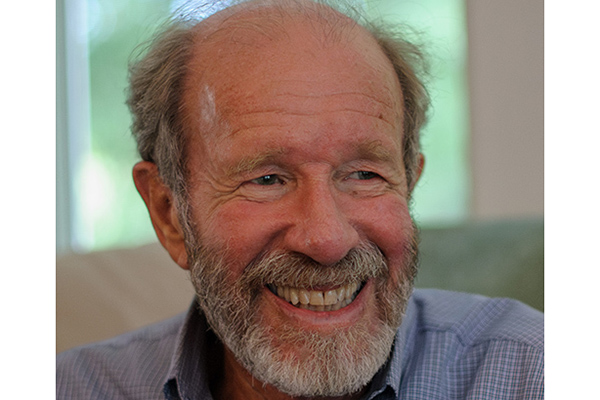
Robert F. Furchgott, Ph.D., one of three scientists to receive the 1998 Nobel Prize in Physiology or Medicine, was a member of the School of Medicine faculty more than 40 years ago.
Formal presentation of the awards will take place Dec. 10 in Stockholm, Sweden.
Furchgott, a pharmacologist at the State University of New York (SUNY), and two other Americans, Ferid Murad, M.D., and Louis J. Ignarro, Ph.D., received the prize earlier this month for their work concerning nitric oxide as a signaling molecule in the cardiovascular system.
Furchgott came to the medical school in 1949 to work in the laboratory of world-renowned researcher Oliver H. Lowry, M.D., Ph.D., who was professor and head of the Department of Pharmacology. Furchgott previously had been an assistant professor of biochemistry at Cornell University. He joined the pharmacology department here as an assistant professor and was one of six faculty members in the 1950s. He was promoted to associate professor in 1952. He studied the effects of drugs on heart rate and rhythm, and, in particular, the action of drugs on the smooth muscle of blood vessels.
F. Edmund Hunter, Jr., Ph.D., professor emeritus of pharmacology, recalled that Furchgott, now 82, was one of Lowry's first recruits after being named head of pharmacology.
"He worked on his own research interests as an independent researcher and taught pharmacology to second-year medical students," said Hunter, of St. Louis. "He was very active, very well liked by all of the faculty, and, his work was well recognized. He was a major contributor in opening up this entire field of understanding the response of smooth muscle tissue. He has devoted nearly a lifetime to it."
Furchgott left the medical school in 1956 to become chairman and professor of the newly established Department of Pharmacology at SUNY. Until that time, pharmacology had been a division of the Department of Physiology at SUNY. Furchgott expanded the department's teaching staff and developed its research initiative, in addition to continuing his research on the biochemistry and pharmacology of the heart and blood vessels.
Hunter described Furchgott as sensitive, soft-spoken and thoughtful. He said Furchgott has returned to St. Louis a number of times through the years. One of his last visits was in 1996 to attend the memorial service for Oliver Lowry.