|
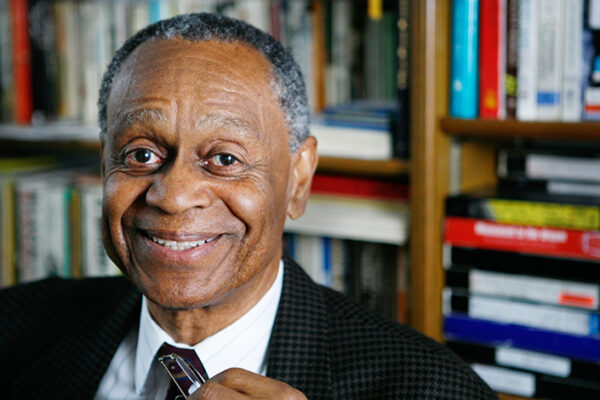
Bob Hansman runs nationially recognized City Faces program |
![]() |
|
||||
|
||||||||||||||||||||||||||||||
|
Vo-Du Macbethopens 30th Edison Theatre OVATIONS! Series
By Liam Otten The 30th annual Edison Theatre OVATIONS! Series will open Sept. 28-29 with Vo-Du Macbeth, a Creole-flavored take on Shakespeare's classic tale, inspired by Orson Welles' famed 1936 adaptation. A rare Edison Theatre co-commission, this work-in-progress is created and produced by the National Spirit Project, a coalition of 35 arts organizations from around the country. St. Louis performances will mark the Midwest premiere of the theatrical and musical components and will serve as a launching point for the production.
Performances are co-sponsored by the University's American Culture Studies program with support from the Department of Music and the Performing Arts Department, all in Arts & Sciences. Welles' Voodoo Macbeth -- his New York debut -- set the famous story of power, manipulation and betrayal in Haiti during the rise of rebel slave leader Toussaint L'Overture, amidst African costumes, drumming and dance. Created in collaboration with The Negro Ensemble Unit of the WPA Federal Theater Project, the show played to packed houses for three months before commencing an influential national tour. It is considered today a landmark of Harlem Renaissance theater. Vo-Du Macbeth retains Welles' basic conception of Macbeth-as-choreo-drama but unfolds the action in New Orleans at the close of the Civil War, among the Gens de Coulour Libre, or Free People of Color. Descended from slaves who had bought their freedom; from the children of slave women and white fathers and from Haitian and later Cuban immigrants, the Free People of Color contributed to a social system in colonial and antebellum Louisiana that defied standard U.S. racial codes and categorizations, amassing millions of dollars in property and carving out their own traditions, professions and distinguished families. Yet such distinctions would begin to fade after the war. The elimination of slavery itself undermined their unique status, especially as whites in the former Confederacy attempted to strip all African-Americans of the rights and opportunities of citizenship. Mespero (the Macbeth character), a rash and ambitious man, plots with his lady to preserve the status quo y aligning himself with the Confederacy against many of his Union-supporting kinsmen. He calls upon ancient powers -- a decision that angers the old African gods. His rise and fall play out against a backdrop of Diaspora culture, from the opening Blessing of the Drums and prophetic mambo, or voodoo priestess, to the closing chorus of healing songs for Hecate, Mother of the Waters. Stops along the way include an old-time masquerade ball; traditional Calinda, Bamboula and Jubu dancing; and the boisterous drumming of a New Year's Eve Junkanoo. Slated for a 2003 world premiere, Vo-Du Macbeth is the brainchild of artistic director Lenwood Sloan, an award-winning dancer, director and choreographer whose previous works include Ethnic Notions, an American Heritage Christmas and Street. Renowned jazz clarinetist and composer Alvin Batiste and sound innovation artist Bill Turley are developing the score, vocals and choral speaking parts. Dance legends Chuck Davis and Donald McKayle are designing the choreography. MacArthur "genius award"-winner John Scott assembled a design team that features Steve Prince from Hampton University, Reggie Ray of Howard University, multimedia artist Philip Mallory Jones, and Atlanta lighting designer Christian Epps. The show is being developed through a national series of community residencies with actors, musicians, scholars and the general public. St. Louis artists participating include Denise Thimes as Hecate and Linda Kennedy as the Mambo. Additional support is provided by the Missouri Arts Council, a state agency; the Regional Arts Commission, St. Louis; and The Heartland Arts Fund. The Heartland Arts Fund is a collaborative venture of Arts Midwest; Mid-America Arts Alliance; their member state arts agencies (Arkansas, Illinois, Indiana, Iowa, Kansas, Michigan, Minnesota, Missouri, Nebraska, North Dakota, Ohio, Oklahoma, South Dakota, Texas and Wisconsin) with primary funding from the National Endowment for the Arts; and support from private contributors. Tickets are $27 and are available at the Edison Theatre Box Office and through all MetroTix outlets. For more information, call 935-6543. |
||||||||||||||||||||||||||||||
|